
Cover for I Research : Journal of Pharmaceutical Chemistry
Open AccessISSN: XXXX-XXXX

I Research : Journal of Pharmaceutical Chemistry

The I Research : Journal of Pharmaceutical Chemistry provides a resource content about the research activities carried out in the development of New Drug candidates, Polymers, etc. This journal aims to publish all the recent research and reviews articles related to pharmaceutical chemistry which includes the Drug discovery process, Docking studies, High throughput Screening methods, Synthetic chemistry, Analytical chemistry etc.. It is the international journal of published Bi-Annual by I Research Academia . Authors should consult the latest instructions to authors before preparing their manuscripts. All contributions must be in English and should be submitted online only in a single word file.

Current Issue: I Research : Journal of Pharmaceutical Chemistry - July -Dec 2026

Volume 1, Number 1 (2026)
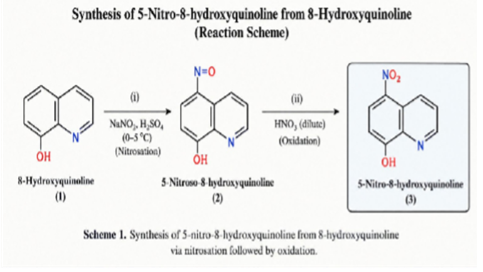
Image for Synthesis, Spectral Characterization and In-Vitro Biological Evaluation of a Novel Zn(II) Mixed-Ligand Complex of 5-Nitro-8-Hydroxyquinoline and L-Threonine
Open AccessResearch Article

Synthesis, Spectral Characterization and In-Vitro Biological Evaluation of a Novel Zn(II) Mixed-Ligand Complex of 5-Nitro-8-Hydroxyquinoline and L-Threonine

By D. Sakthipandi, M. Sahin Nilofer, D. Sakshi, P.Selvaparani, R. Shabik Mohamed, A. Senthamil Selvi
Metal-based drug design continues to occupy a central position in medicinal chemistry because coordination of a bioactive ligand to a transition metal can markedly alter its pharmacological profile. In the present work, a novel Zn(II) mixed-ligand complex was synthesized from 5-nitro-8-hydroxyquinoline (a clinically used quinolone antimicrobial, also known as a nitroxoline analogue) and the essential amino acid L-threonine. 5-Nitro-8-hydroxyquinoline was first prepared from 8-hydroxyquinoline through nitrosation followed by oxidative nitration, purified with activated carbon, and then reacted with zinc acetate dihydrate and L-threonine in an aqueous-ethanolic medium to yield the target complex as a yellow precipitate. The ligand and the complex were characterized by FTIR and ¹H NMR spectroscopy, and the metal content was verified by atomic absorption spectroscopy (AAS). In-vitro antioxidant activity was assessed by the ferric reducing antioxidant power (FRAP) assay, while antifungal activity against Candida albicans and antibacterial activity against Escherichia coli and Staphylococcus aureus were evaluated by the well/cup diffusion method. FTIR spectra confirmed retention of the hydroxyl and aromatic ring systems together with a shift in the nitro-group stretching frequencies on complexation, while ¹H NMR spectra showed the expected aromatic proton pattern of the quinoline ring. The Zn(II) complex displayed concentration-dependent antioxidant activity and showed enhanced antifungal activity relative to the free ligand, producing a maximum zone of inhibition of 25 mm against C. albicans at 150 µg/mL, whereas the free ligand retained a marginally higher antibacterial effect against E. coli and S. aureus. These findings support the continued exploration of quinoline-amino acid Zn(II) complexes as multi-target antimicrobial and antioxidant leads.
Image for In Silico Docking and In Vitro Antiurolithiatic Activity of Hydroalcoholic Extract of Corallocarpus epigaeus Rhizome
Open AccessResearch Article

In Silico Docking and In Vitro Antiurolithiatic Activity of Hydroalcoholic Extract of Corallocarpus epigaeus Rhizome

By D. Sevvanthi, Yamina Jesrin. U, Arunthathi. A, Bhavani. A, Kalpana. M
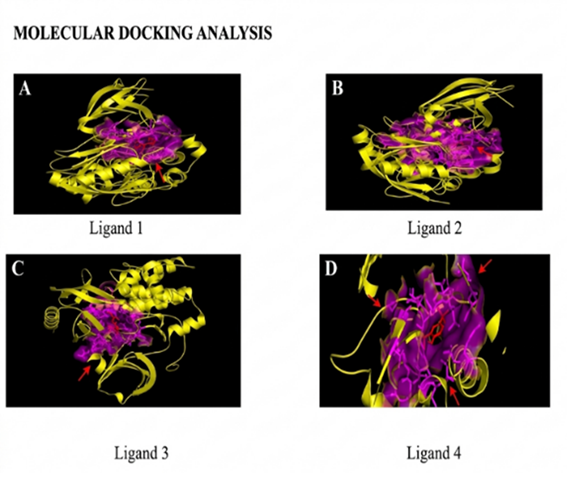
Corallocarpus epigaeus (Rottler) C.B. Clarke (Cucurbitaceae) is a traditionally used medicinal plant whose tuberous rhizome has long been applied for inflammatory, hepatic and urinary complaints. The present study evaluated the phytochemical composition and antiurolithiatic potential of a hydroalcoholic extract of C. epigaeus rhizome (HAECER) through preliminary phytochemical screening, GC-MS profiling, in silico molecular docking and an in vitro calcium oxalate dissolution assay. Preliminary screening revealed the presence of alkaloids, flavonoids, sterols, carbohydrates, proteins, amino acids, gum and mucilage, terpenoids, saponins and phenolic compounds. GC-MS analysis identified γ-sitosterol, α-tocopherol, hexadecanoic acid methyl ester (methyl palmitate) and 2,4-di-tert-butylphenol as the major bioactive constituents. Molecular docking of these four compounds against AKT1 protein showed favourable predicted binding affinities, with γ-sitosterol showing the strongest interaction (−10.991 kcal/mol), followed by α-tocopherol (−9.529 kcal/mol), 2,4-di-tert-butylphenol (−7.135 kcal/mol) and hexadecanoic acid methyl ester (−6.048 kcal/mol). The in vitro calcium oxalate dissolution assay demonstrated a concentration-dependent antiurolithiatic effect, with percentage inhibition rising from 16.47% at 10 mg/mL to 57.65% at 50 mg/mL and an IC₅₀ of approximately 44.09 mg/mL. Taken together, these phytochemical, computational and experimental findings provide preliminary evidence supporting the antiurolithiatic potential of Corallocarpus epigaeus rhizome extract, warranting further in vivo and mechanistic investigation.
Image for IN VITRO ANTIOXIDANT AND ANTI-HAEMOLYTIC ACTIVITY OF THE ETHANOLIC EXTRACT OF MORINDA CITRIFOLIA L.
Open AccessReview Article

IN VITRO ANTIOXIDANT AND ANTI-HAEMOLYTIC ACTIVITY OF THE ETHANOLIC EXTRACT OF MORINDA CITRIFOLIA L.

By Tharageshwari. M, Thirumoorthy Ragavan. G, Thembavani. I, A. Senthamilselvi

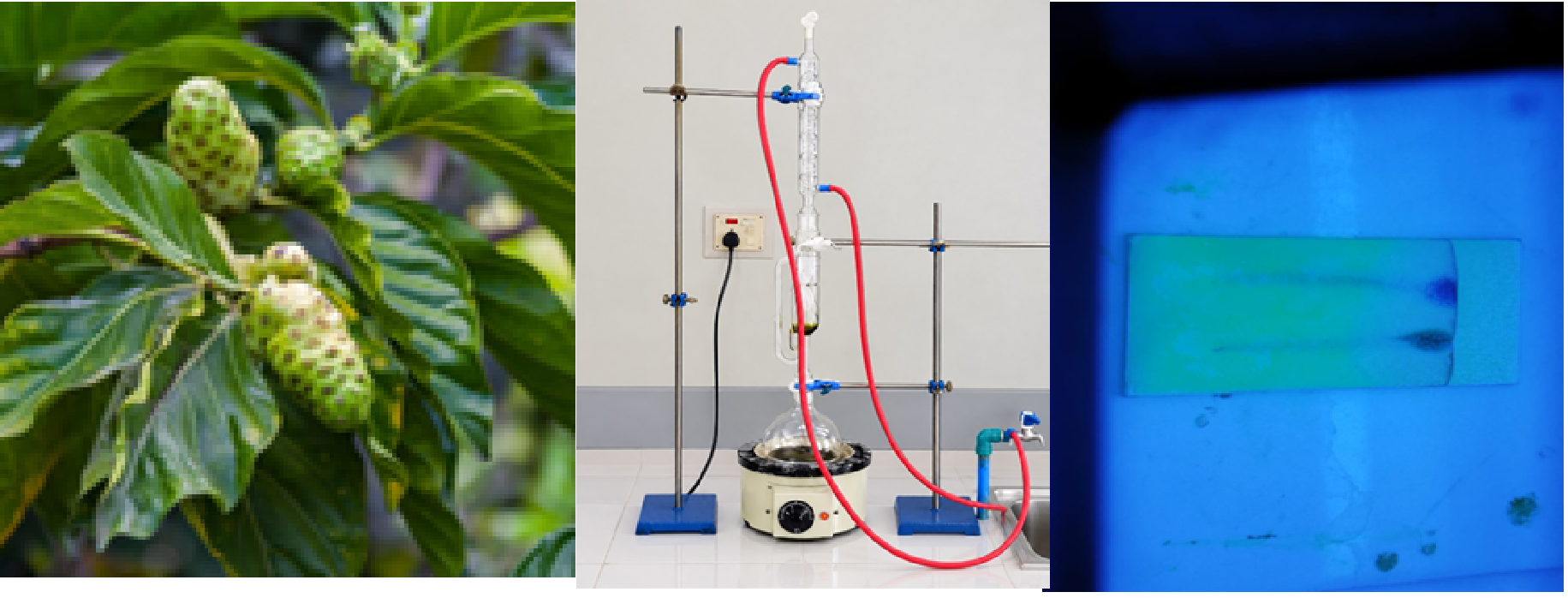
Morinda citrifolia L. (Rubiaceae), commonly known as noni, is a small evergreen tree traditionally used across the Indian coastline and the wider Indo-Pacific region for a broad range of ailments. The present study evaluated the preliminary phytochemical profile, in vitro antioxidant activity, and in vitro anti-haemolytic activity of the ethanolic extract of the leaves and fruits of M. Citrifolia, following authentication of the plant material by the Department of Botany, The American College, Madurai. The extract was obtained by Soxhlet extraction and screened qualitatively for major phytochemical classes. Antioxidant activity was assessed by the potassium ferricyanide reducing-power method, and protection of human erythrocytes against hydrogen-peroxide-induced haemolysis was assessed using quercetin as the reference standard. Preliminary screening indicated the presence of steroids, cardiac glycosides, phenolics, terpenoids, resins, carbohydrates, flavonoids, reducing sugars and saponins, with alkaloids and anthraquinones absent. The ethanolic extract exhibited concentration-dependent reducing power, although lower than that of ascorbic acid, and showed a concentration-dependent reduction in hydrogen-peroxide-induced haemolysis of erythrocytes, comparable in trend to quercetin. These findings support the traditional use of M. citrifolia as a source of natural antioxidant and membrane-protective constituents, and provide a basis for further isolation and in vivo evaluation of its bioactive phytoconstituents.

News & Announcements

There are no news or announcements at this time.