TheResearch Gate: Pharmaceutical Science provides a resource content dealing with the Pharmaceutical industry starting from drug discovery process to drug distribution system to patients.
The Research Gate: Pharmaceutical Scienceaims to publish all the recent and exceptional research articles and reviews in all areas of modern Pharmaceutical industry like drug discovery including in-silico drug design, combinatorial chemistry, new drug targets, Bioinformatics and chemoinformatics, Genomics and proteomics, medicinal chemistry, SAR, high-throughput screening, advances in ADME, drug delivery and Biopharmaceuticals, phytochemistry and pharmacognosy.
Journal Policy
Current Issue: Research Gate: Pharmaceutical Sciences - Oct - Dec 2026
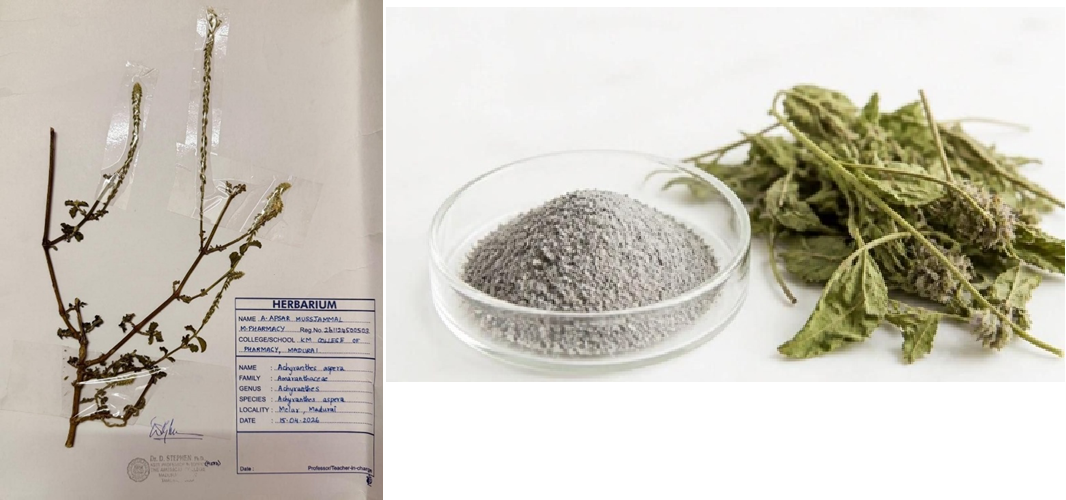
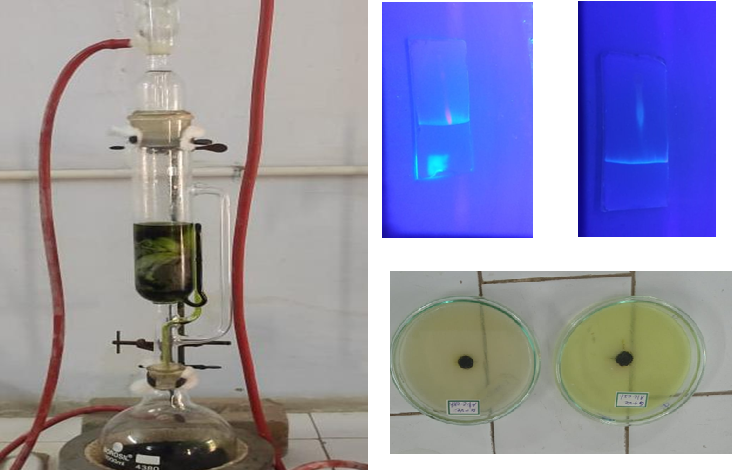
Conventional tube toothpaste generates enormous, largely non-recyclable plastic waste and depends on water for use, which has prompted interest in solid, waterless dentifrice formats. In this study a herbal chewable tooth tablet was formulated using the calcined ash of Achyranthes aspera (Apamarga Kshar), a plant used traditionally in Indian oral-care practice, as the principal abrasive and mineral-rich active ingredient. Tablets were prepared by direct compression using mannitol and calcium carbonate as diluents, microcrystalline cellulose as a binder/filler, xylitol as a non-cariogenic sweetener, a peppermint–menthol–clove flavour system, talc and magnesium stearate as lubricant/glidant, and crospovidone and croscarmellose sodium as superdisintegrants. Six trial formulations (F1–F6) were prepared by varying the ratio of the two superdisintegrants while holding total tablet weight constant at 300 mg. Pre-compression (bulk density, tapped density, Carr’s index, Hausner ratio, angle of repose) and post-compression (weight variation, thickness, hardness, friability, wetting time, water absorption ratio, in-vitro disintegration and dissolution, drug content, moisture content, surface pH and foaming ability) parameters were evaluated, together with herbal-specific tests (ash value, particle size distribution, antimicrobial activity against oral pathogens) and Fourier-transform infrared (FTIR) drug–excipient compatibility studies. A preliminary optimization matrix, followed by Central Composite Design (CCD) and Box–Behnken Design (BBD) response-surface modelling, was used to study the combined effect of crospovidone and croscarmellose sodium (and, in the BBD, compression force) on tablet hardness and disintegration time. Formulation F5 (crospovidone 10 mg, croscarmellose sodium 8 mg per 300 mg tablet) gave the most balanced profile, combining adequate hardness (~4.0–4.5 kg/cm²), rapid disintegration (24–32 s), low friability (<0.6% w/w), acceptable surface pH (7.15 ± 0.03), optimal foaming, and the highest in-vitro drug/marker release, and was carried forward as the optimized batch. FTIR spectra of the ash and the optimized tablet showed no loss or shift of the characteristic functional-group bands of the ash, indicating drug–excipient compatibility. These findings support the technical feasibility of a plant-ash–based, direct-compression tooth tablet as a low-plastic, water-saving alternative to conventional paste dentifrice, while highlighting the need for confirmatory clinical and full stability data before commercial translation.
Dengue fever remains an important public health problem and is frequently accompanied by thrombocytopenia, a marked fall in circulating platelet count. Carica papaya leaves have long been used for their reported platelet-boosting and anti-dengue properties, but their pronounced bitterness limits patient acceptability. This study examined whether bentonite treatment could reduce the bitterness of Carica papaya leaf extract without substantially altering its phytochemical content, and whether the treated extract could be formulated into an orally acceptable lozenge. Dried papaya leaves were treated with bentonite at three leaf-to-adsorbent ratios (1:10, 1:15, 1:20) by boiling or submersion, and the treated leaves were assessed for bitterness intensity by a trained sensory panel and for phytochemical content by qualitative screening, thin-layer chromatography and FTIR spectroscopy. Boiling with bentonite at a 1:15 ratio gave the greatest reduction in bitterness while retaining most of the major phytochemical constituents; only tannins and saponins were lost on treatment. The bentonite-treated extract was then formulated into lozenges by the heating-and-congealing method using polyethylene glycol (PEG), polyvinylpyrrolidone (PVP) and gelatin as base-forming agents, across five formulations (F1–F5) that varied the PEG:PVP ratio. The formulations showed acceptable average weight (2.16–3.08 g), friability (0.4–0.8%), hardness (10.1–12.2 kg/cm²), drug content (89.2–97.3%), moisture content (0.5–0.8%) and mouth-dissolving time (9.9–14.8 min). Formulation F4 gave the fastest and most complete in vitro drug release, reaching 98.91% within 45 min, and retained its physicochemical characteristics on short-term accelerated stability testing. These findings indicate that bentonite pretreatment can effectively mask the bitterness of Carica papaya leaf extract while preserving key bioactive constituents, and that the treated extract can be formulated into a stable, palatable lozenge with potential application in the supportive management of dengue-associated thrombocytopenia.