
Cover for I Research : Journal of Pharmacognosy
Open AccessISSN: XXXX-XXXX

I Research : Journal of Pharmacognosy

The I Research : Journal of Pharmacognosy provides a resource content about the research activities carried out in the area of Pharmacognosy, Phytochemistry, Phytochemical analysis etc. This journal aims to publish all the recent research and reviews articles related to phytochemistry, standardization of phytochemicals, herbal formulation and their evaluation, Phyto chemical analysis, Isolation of active constituents from plant sources, plant tissue culture etc. It is the international journal of published Bi-Annual by I Research Academia . Authors should consult the latest instructions to authors before preparing their manuscripts. All contributions must be in English and should be submitted online only in a single word file.

Current Issue: I Research: Journal of Pharmacognosy, July - Dec 2026

Volume 1, Number 1 (2026)
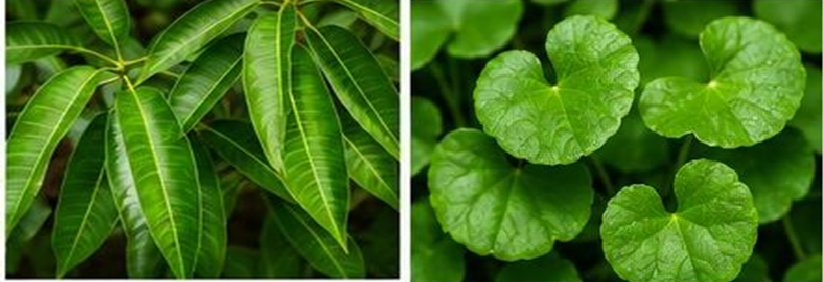
Image for FORMULATION AND EVALUATION OF HERBAL CAPSULES FROM <i>MANGIFERA INDICA</i> AND <i>CENTELLA ASIATICA</i> LEAVES EXTRACT WITH ANTI-OXIDANT ACTIVITY
Open AccessResearch Article

FORMULATION AND EVALUATION OF HERBAL CAPSULES FROM MANGIFERA INDICA AND CENTELLA ASIATICA LEAVES EXTRACT WITH ANTI-OXIDANT ACTIVITY

By S.SHARMATHI, M.SWEATHA, N. THIRUKUMARAN, M. SURYA KUMAR , R.SURYA
Background: Oxidative stress arising from excessive reactive oxygen and nitrogen species is implicated in the pathogenesis of several chronic disorders, which has renewed interest in plant-derived antioxidants as safer alternatives to synthetic agents. Mangifera indica L. (mango) and Centella asiatica (L.) Urban (gotu kola) are two ethnomedicinally important species whose leaves are rich in phenolics, flavonoids and triterpenoids. Objective: This study was designed to extract, characterise and combine the hydroalcoholic leaf extracts of M. indica and C. asiatica into a single hard-gelatin capsule and to evaluate the resulting formulation for phytochemical composition, antioxidant potential and pharmaceutical quality. Methods: Shade-dried leaf powders were extracted separately by hydroalcoholic (70% ethanol-water) Soxhlet extraction. The extracts were screened qualitatively for phytoconstituents and quantitatively for total phenolic content (TPC, Folin-Ciocalteu method) and total flavonoid content (TFC, aluminium chloride method). A combined powder blend was evaluated for micromeritic properties, filled into hard gelatin capsules, and the capsules were assessed for physical appearance, weight variation, moisture content, disintegration time, content uniformity, in-vitro dissolution, FTIR drug-excipient compatibility and DPPH radical-scavenging activity.
Image for Pharmacognosy, Phytochemical and In-Vitro Thrombolytic Activity of leaves of Artabotrys hexapetalus
Open AccessResearch Article

Pharmacognosy, Phytochemical and In-Vitro Thrombolytic Activity of leaves of Artabotrys hexapetalus

By S. Viswini, M. Vishnupriya, S. Vishnu kumar, M. Vanmathy , K. Murugeswari

Medicinal plants remain an important source of bioactive molecules for managing thrombotic disorders, which continue to rank among the leading causes of death worldwide. Artabotrys hexapetalus (Annonaceae), a fragrant ornamental shrub with a long history of use in Ayurvedic, Siddha and folk medicine, has been reported to contain a range of pharmacologically active phytoconstituents, yet its thrombolytic potential has received little dedicated investigation. Objective: This study characterises the pharmacognostical and phytochemical profile of A. hexapetalus leaves and evaluates their in vitro clot-lysing activity. Methods: Authenticated fresh leaves were subjected to macroscopic, microscopic and quantitative microscopic examination, followed by determination of physicochemical constants. A hydroalcoholic extract (HAEAH) was prepared, screened for major phytoconstituents, and tested for thrombolytic activity using a clot lysis assay, with streptokinase and 0.9% saline serving as positive and negative controls, respectively. Results: The leaves displayed reproducible diagnostic macro- and microscopic features, and the hydroalcoholic extract (12.03% w/w yield) tested positive for alkaloids, flavonoids, tannins, saponins, terpenoids and phenolic compounds. HAEAH produced a concentration-dependent rise in clot lysis, from 63.74 ± 0.73% at 5 mg/mL to 74.78 ± 0.38% at 10 mg/mL, a level comparable to that of streptokinase (69.43 ± 0.33%). Conclusion: A. hexapetalus leaves possess a distinctive pharmacognostical profile and demonstrate promising in vitro thrombolytic activity, supporting their further investigation as a candidate source of plant-derived thrombolytic agents.

News & Announcements

There are no news or announcements at this time.